What is actually happening
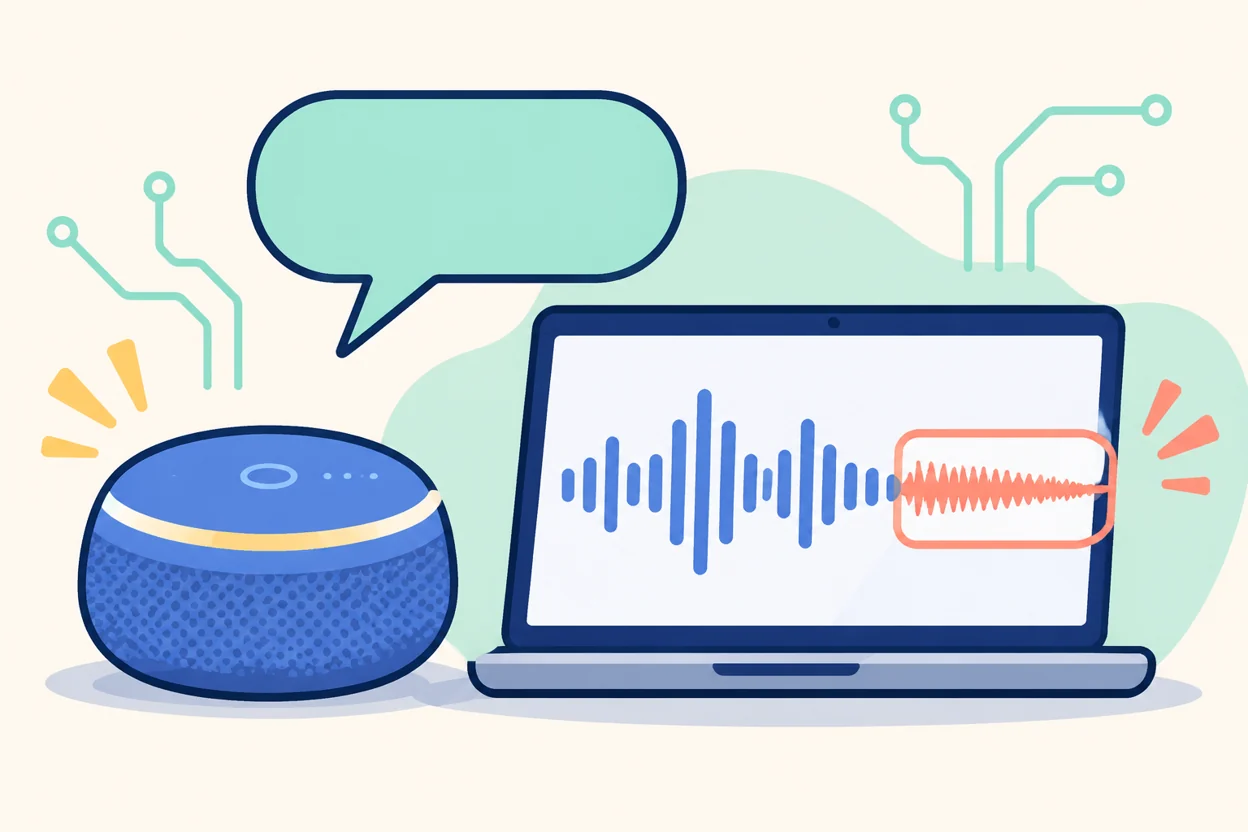
Modern text-to-speech systems are trained on hours of recorded speech, increasingly including spontaneous, conversational speech because it sounds more natural than read text. Spontaneous speech contains a lot of creak, especially at phrase ends. A 2023 paper at the International Congress of Phonetic Sciences, from a team at KTH in Stockholm, built neural speech synthesis with controllable creaky voice for exactly this reason: creak is part of natural speech, and it is hard to handle.
The same group’s 2024 Interspeech paper, CreakVC, goes further. It represents creak frame by frame, using a creak detector (CreaPy) combined with a voice-conversion model (FreeVC), so the amount of creak in converted speech can be dialled up or down. The paper names voice-interactive systems and media production as possible uses.
A plausible mechanism for sentence-final creak
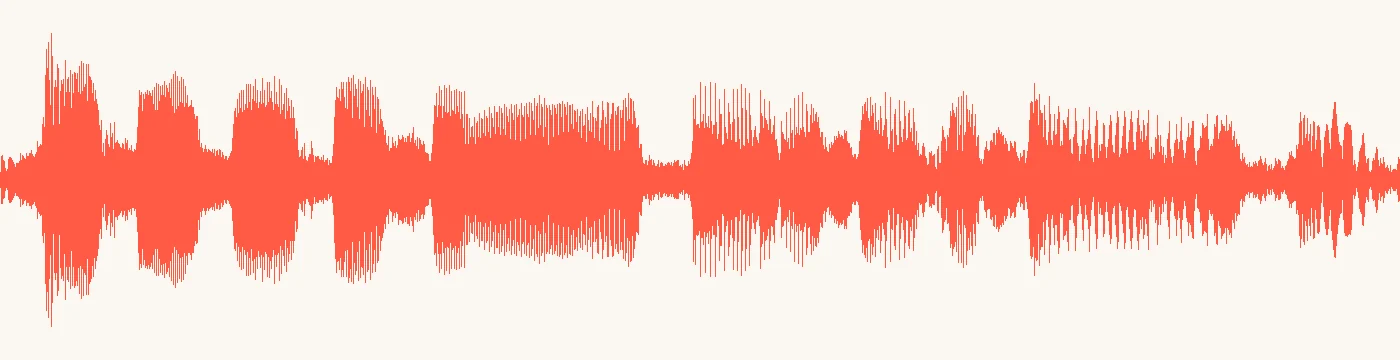
Put those findings together and a likely chain appears:
- The training recordings contain sentence-final creak.
- The model learns prosody, the rise and fall of a sentence, and creak travels with the falling pitch at the end.
- Default controls in most products adjust speed, pitch or style, but rarely have a dedicated “creak” setting.
- So creak appears as a by-product, more in some voices than others.
This is an inference from research, not a vendor statement. We found no AI company explaining why its own voices creak, and we have not run listening tests on specific commercial products, so we make no claim about any particular assistant.
Why people notice it
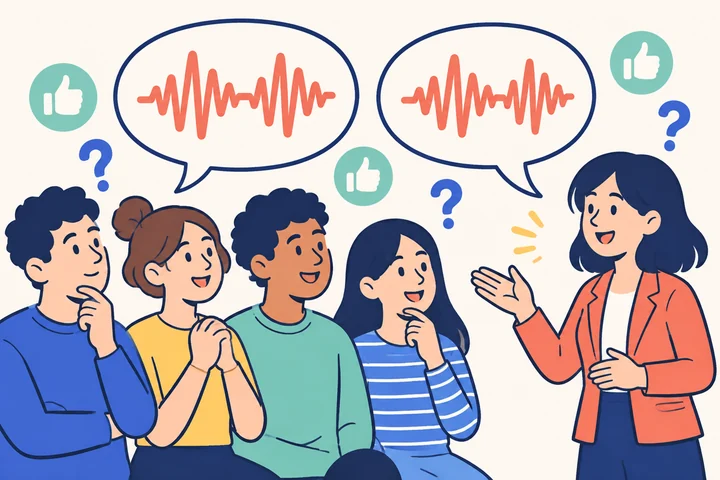
Creak lowers perceived pitch and adds irregular pulses, and listeners notice it mainly through that low pitch, according to a 2023 Applied Sciences study and the 2026 McGill work. The 2014 PLOS ONE study shows listeners attach strong judgments to fry in human voices. People bring those reactions to synthetic voices too, which is part of why a creaky AI voice gets commented on at all.
Can you remove it?
In research, yes: CreakVC shows creak can be controlled. In products, it depends. Sonarworks, which sells audio tools, notes that AI voice plugins learn fry and grit from large sets of recordings, and that the result depends on the plugin, the quality of the input and the target voice; they do not perfectly reproduce real fry. In practice, your options are usually to pick a different voice, change the speaking style if the tool allows it, or edit the audio afterwards. Be wary of anything promising “one-click fry removal”.
Not all AI voices creak
Whether you hear fry depends on the model, the recordings it learned from and the specific voice. Some voice libraries even sell creak as a feature: ElevenLabs’ voice library has a “croaky” category with voices described as having intentional vocal fry (we saw this as a search listing). Singing synthesis is similar; VOCALOID6 users add fry through parameter editing, as covered on vocal fry in singing.
One common mix-up: Sam Altman, CEO of OpenAI, is often discussed for his own vocal fry. That is his natural voice and has nothing to do with how ChatGPT’s synthetic voices sound. See Sam Altman’s vocal fry.
Further reading: CreakVC (Interspeech 2024, PDF) · Controllable creaky voice synthesis (ICPhS 2023, PDF)