Fry scream vs false cord vs speaking fry
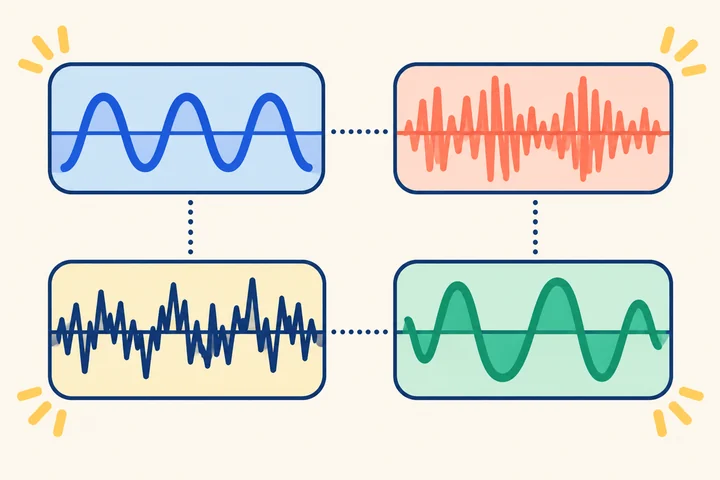
The Extreme Vocal Institute compares the two main scream families, fry and false cord. We added a third column for ordinary speaking fry so the difference is visible at a glance.
| Fry scream | False-cord scream | Speaking vocal fry | |
|---|---|---|---|
| Sound | Bright, “TV static” distortion | Low, dark, heavy | Low rattle or creak |
| Volume | Around speaking volume | Not stated in the source | Quiet |
| Air pressure | Less | More | Very little |
| Strongest frequencies | High and mid | Low and mid | Very low pulses |
| Main risk | Forcing it | Forcing it, too much pressure | Debated; see the health page |
The speaking column draws on our definition page; the scream columns come from the Extreme Vocal Institute’s guide. Screaming is studied as an extended vocal technique, a performance skill, not a register you fall into by accident.
Why they get confused
Both are called “fry”, both sound rough, and fry scream lessons often begin by asking you to find ordinary fry first. The difference is what happens next. In speech, fry is the end point: the voice relaxes into slow pulses and stops there. In a fry scream, that loose closure becomes the starting point for added breath, mouth shape and resonance until it turns into a sustained, bright distortion. One is a register; the other is a sound built on top of it.
Speaking-style fry, for comparison
Public-domain sample, “Vocal Fry.ogg”, Wikimedia Commons (CC0). Compare it with the scream tutorials below.
Hear a fry scream explained
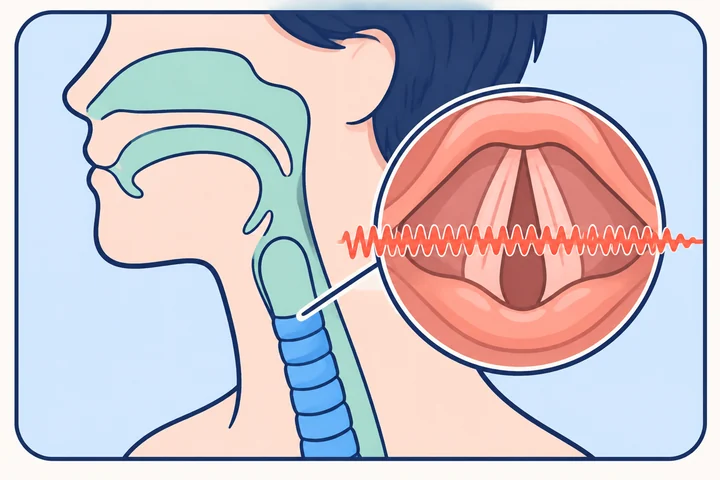
Two widely watched tutorials from scream teachers. RiffShop’s includes an anatomy explanation; Andy Cizek’s focuses on finding the sound.
Gutturals, growls and doing fry “while” doing a guttural
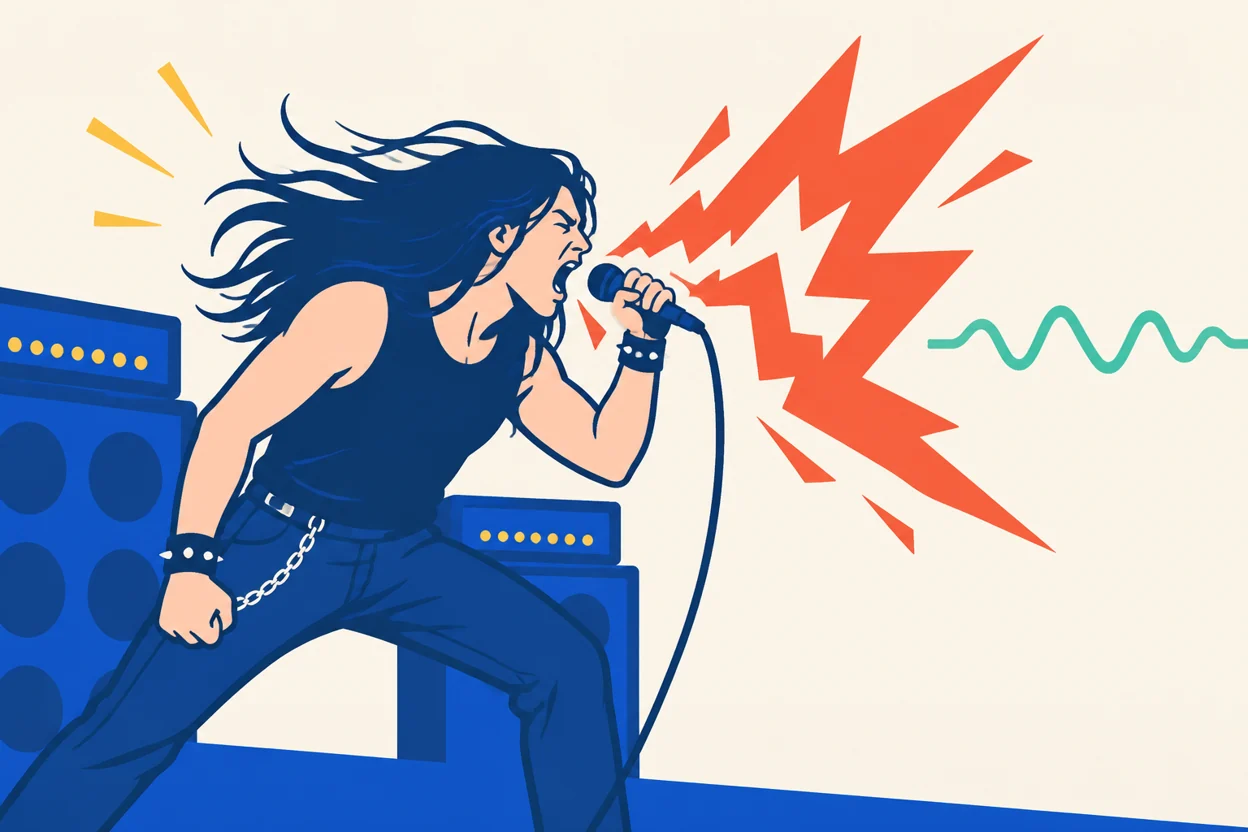
A guttural is an extremely low, throaty distortion, the death growl’s deepest cousin. Wikipedia describes the death growl as a low, guttural style used in death metal; vocalists generally build gutturals on false-cord or other low distortions, not on speaking fry. People often ask whether you can do vocal fry while doing a guttural. Teachers discuss switching between these sound qualities within a phrase. Doing both at the same moment has no agreed definition or name in the teaching sources we found, so the honest answer is that the question has not been settled, so we do not prescribe a combined technique here.
Is it safe?
The Extreme Vocal Institute’s position is that most extreme-vocal damage comes from forcing the sound rather than from fry or false-cord technique itself, and that air pressure, placement and mouth shape are what you control. In 2024, University of Utah Health researchers filmed a professional harsh vocalist with dynamic MRI and measured muscle activity; they found a controlled, repeatable technique and aim to show that this kind of singing does not have to harm the voice. That is one singer, so it shows what is possible with training, not that anyone can scream safely.
- Learn with a teacher who specialises in extreme vocals.
- Stop at pain, tickle-cough or lasting hoarseness.
- Warm up with gentle speaking fry and humming, then build volume slowly.
For fry in clean singing, see vocal fry in singing; for the health debate about speaking fry, see is vocal fry bad?